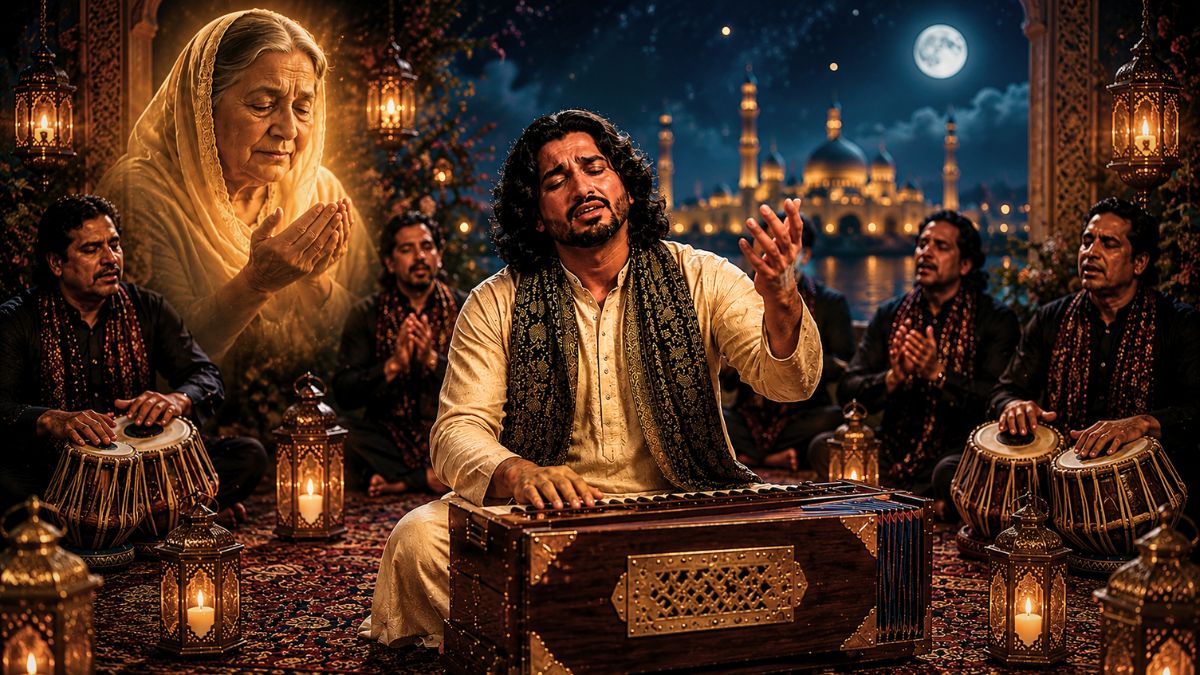
“Maa Ki Dua (The Unseen Shield)” is an original Sufi-inspired Qawwali exploring the themes of repentance (Tawbah), humility, mercy, and the immeasurable blessings of a mother’s sincere prayers.
Drawing inspiration from Islamic teachings that emphasize kindness toward parents and the acceptance of heartfelt supplications, this composition follows the emotional journey of a son who became lost in the illusions of wealth and worldly success, only to realize that the greatest protection he ever possessed was the dua of his mother.
Below is the lyrical meaning, spiritual symbolism, and Islamic inspirations behind the poetry written by Kaneez Fatma.
📖 The Spiritual Context
📿 Tahajjud – The Prayer of the Night
Tahajjud is one of the most beloved voluntary prayers in Islam, performed during the last portion of the night when most people are asleep.
It is a time of sincere repentance, intimate supplication, and closeness to Allah. The Qawwali poetically imagines a mother standing in Tahajjud, praying for the guidance and protection of her child. While the expression “The Unseen Shield” is poetic symbolism rather than a literal doctrine, it reflects the immense value Islam places on a parent’s sincere dua.
🕌 Hazrat Owais al-Qarni (RA)
Hazrat Owais al-Qarni (RA) lived in Yemen during the lifetime of Prophet Muhammad ﷺ. Although he deeply wished to meet the Prophet ﷺ, he remained devoted to serving his elderly mother and therefore never traveled to Madinah.
Authentic narrations mention that the Prophet ﷺ praised Owais and informed his Companions that if they met him, they should ask him to seek forgiveness for them because of his righteousness and devotion.
His story has become one of the greatest examples of honoring one’s parents and sacrificing worldly desires for their service.
🎵 Full Lyrics, Translation & Spiritual Reflection
The Prelude — The Confession
आ……… ऐ मेरे मौला………
दुनिया ने मुझे ठुकरा दिया…
हर अपने ने पर्दा गिरा दिया…
मैं टूट के बिखर ही जाता…
ऐ मौला…
अगर मेरी माँ ने…
मुझे दुआओं में ना छुपा लिया होता…
Translation
O my Lord…
The world abandoned me…
Even those close to me turned away…
I would have completely fallen apart…
Had my mother not remembered me in her prayers.
The Hook — The Power of a Mother’s Dua
मेरे गुनाहों की…
सज़ा मुझे मिल जाती!
अगर तहज्जुद में…
मेरी माँ के हाथ ना उठते!
ये जो मैं ज़िंदा हूँ…
ये माँ की दुआ है!
ये जो मैं हँसता हूँ…
मेरी माँ के सजदों का सिला है!
Translation
I might have suffered for my mistakes…
Had my mother’s hands not been raised in Tahajjud.
That I still live…
is a blessing from my mother’s prayers.
That I still smile…
is a gift from her endless prostrations.
Meaning
The lyrics poetically express a believer’s realization that Allah’s mercy often reaches us through the sincere prayers of righteous parents.
Verse 1 & 2 — The Illusion of the World
मैं दौलत के नशे में…
घर की दहलीज़ छोड़ आया था…
वो पीछे पुकारती रही…
और मैं आगे दौड़ आया था!
जब महलों की भीड़ में…
मैं बिल्कुल तन्हा हो गया…
मैं हार कर लौटा तो देखा…
वो उसी मुसल्ले पे बैठी…
मेरे लिए रो रही थी!
Meaning
The worldly life appears attractive but often leaves the heart empty. When everything else disappears, the unconditional love of a mother remains.
Verse 3 — Mercy Descends
अर्श तक लरज़ उठता है…
जब माँ रोती है…
रब की रहमत बरसती है…
जब माँ रोती है…
नबी का फ़रमान है…
यही हक़ीक़त है ऐ इब्ने-आदम!
तेरी माँ के क़दमों के नीचे ही…
तेरी जन्नत है!
Meaning
The expression “the Throne trembles” is poetic imagery representing the emotional power of a mother’s sincere supplication.
Islam authentically teaches that Paradise lies beneath the feet of one’s mother, emphasizing her elevated status.
The Owais Qarni Reflection
Hazrat Owais al-Qarni (RA) could not meet Prophet Muhammad ﷺ because he remained devoted to serving his mother.
Yet the Prophet ﷺ praised his righteousness before his Companions.
His story reminds believers that serving one’s parents is among the greatest acts of worship.
The Wajd Climax
जिनकी माँएँ नहीं हैं…
उनसे जा कर पूछो!
वो सूने घर का…
सन्नाटा जा कर देखो!
ऐ मौला!
मेरी माँ का साया…
मेरे सर पे सलामत रख!
Meaning
The Qawwali concludes with an emotional reminder to appreciate our parents while they are alive and to make dua for them after their passing.
📚 Qur’an & Hadith References
“And lower to them the wing of humility out of mercy and say: My Lord, have mercy upon them as they raised me when I was small.” (Surah Al-Isra 17:24)
“Paradise lies beneath the feet of the mother.” (Sunan an-Nasa’i 3104)
“The pleasure of Allah lies in the pleasure of the parent, and the anger of Allah lies in the anger of the parent.” (Jami’ at-Tirmidhi 1899)
🎧 Experience the Emotion
If this Kalam touched your heart, cherish your parents while they are with you, and make sincere dua for them every day.
If they have returned to Allah, continue praying for their forgiveness and mercy, for the dua of a righteous child remains among the lasting deeds that benefit them.
▶ Watch the Official Video on YouTube:
▶ Stream on Spotify, Apple Music & All Platforms:
https://distrokid.com/hyperfollow/bellafusion/maa-ki-dua-the-unseen-shield
Song Credits
- Song: Maa Ki Dua (The Unseen Shield)
- Artist: Bella Fusion
- Lyrics: Kaneez Fatma
- Concept & Music Production: Bella Fusion
Visuals: AI Generated & Edited by Bella Fusion
Great content! Keep up the good work!