Shaan-e-Mustafa (Meraj Ki Raat) – Lyrics & Lore
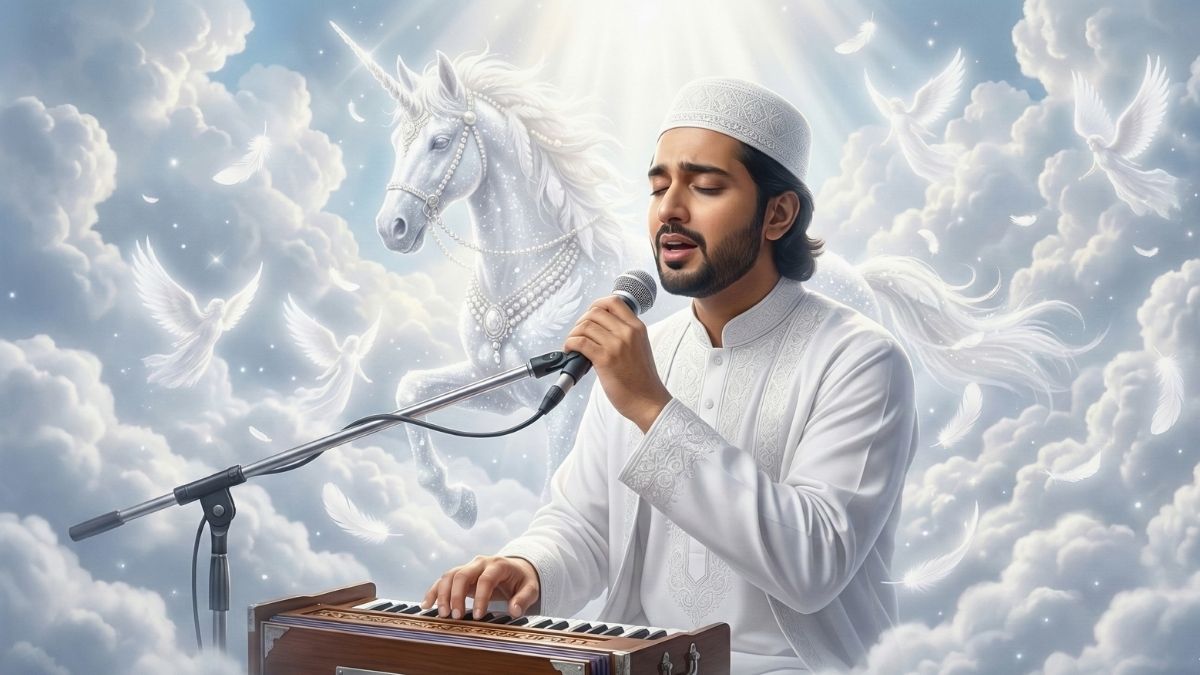
Shaan-e-Mustafa (Meraj Ki Raat) is a majestic Sufi Qawwali by Bella Fusion, released specially for Shab-e-Meraj 2026.
This composition is not just a song — it is a spiritual travelogue that traces the miraculous journey of Prophet Muhammad ﷺ from Makkah to Jerusalem (Isra), and then his ascension through the Seven Heavens (Mi’raj) — a journey in which Allah honored His beloved Messenger ﷺ with extraordinary nearness, blessings, and divine gifts. The full reality of this event is known only to Allah.
Within this post, you will find:
- The complete lyrics (as released in the official video).
- Heartfelt English translation.
- Quranic & Hadith-based Lore behind the verses — from the Buraq to the Gift of Salah.
Also known as: Meraj Ki Raat Qawwali, Isra wal Mi’raj Journey, and Meraj Ka Waqia.
🎥 Watch the Official Video
👉 Watch I Love Muhammad Full Series Here
🎧 Now available on Spotify, Apple Music, YouTube Music, Amazon Music, and all major streaming platforms:
https://distrokid.com/hyperfollow/bellafusion/shaan-e-mustafa-meraj-ki-raat
The Lore: Understanding the Journey
Important Note (Devotional Lore):
This “Lore” section is written in a respectful devotional style to explain the meaning of the verses. The core events of Isra wal Mi’raj are established in authentic Islamic sources, while certain poetic expressions are used to convey spiritual meaning and reverence.
The Preparation (Opening of the Chest)
The Qawwali begins with the arrival of Angel Jibreel (عليه السلام). The lyrics mention:
“Chaak hua seena” (The chest was opened)
This refers to the authentic narrations of Shakk as-Sadr (opening of the chest), where the Prophet ﷺ’s chest was opened and his heart was cleansed — and in some narrations washed with the water of Zamzam — as divine preparation for the blessed journey. This is mentioned in the well-known narrations of Isra wal Mi’raj in Sahih al-Bukhari and Sahih Muslim.
The Buraq (The Miraculous Swift Journey)
The lyrics describe the Buraq, a special mount brought for the journey. The line:
“Palak jhapki” (In the blink of an eye)
This expresses the miraculous speed and divine nature of the night journey. In authentic narrations, the Buraq is described as moving with extraordinary swiftness, placing its steps at the farthest distance within its sight.
The Seven Heavens (Meetings with Prophets)
A unique feature of this Qawwali is the detailed description of the Prophets met at each level of Heaven. This is based on the famous narrations of Isra wal Mi’raj. The order described is:
- 1st Heaven: Adam (عليه السلام)
- 2nd Heaven: Isa (عليه السلام) & Yahya (عليه السلام)
- 3rd Heaven: Yusuf (عليه السلام) — Whose beauty is described as lighting up the world.
- 4th Heaven: Idris (عليه السلام)
- 5th Heaven: Harun (عليه السلام)
- 6th Heaven: Musa (عليه السلام) — Deeply moved by the honor of the Ummah.
- 7th Heaven: Ibrahim (عليه السلام) — Near Bait-ul-Ma’mur (The Celestial House).
Sidrat-ul-Muntaha (The Ultimate Boundary)
The Qawwali reaches the stage of Sidrat-ul-Muntaha — described as the boundary beyond which creation does not pass. In devotional tradition, it is commonly expressed that Jibreel (عليه السلام) reached his limit there. The poetic line:
“Ek qadam aur badhoon… to jal jaunga…”
Is a powerful devotional expression of that limit and the overwhelming Noor (Light) of the unseen realm.
The Highest Nearness (Qurb)
The lyrics quote the Quranic verse:
“Fa-kaana qaaba qawsayni aw adnaa…”
This is mentioned in Surah An-Najm (53:8–9). Muslims affirm this Azeem (Great) honour with full respect and Adab, while acknowledging that the true reality of this Maqam and the unseen events are known only to Allah.
The Gift of Salah
The climax of the Qawwali focuses on the greatest gift brought back for the Ummah: Salah (Prayer). The verse:
“Momin ki Meraj hai Sajdah-e-Bandagi”
Beautifully connects the Meraj of the Prophet ﷺ with the spiritual elevation granted to every believer through Salah.
Shaan-e-Mustafa (Meraj Ki Raat) – Full Lyrics & Translation
आ… आ… आ…
अल्लाह… हू…
हू… आ… या मुस्तफ़ा…
या मुस्तफ़ा… या मुस्तफ़ा…
सल्लल्लाहु अलैहि वसल्लम
Translation:
Allah Hu… O Chosen One (Mustafa)…
Peace and blessings be upon him.
देखो अर्शे- बरीं पर, शान-ए-मुस्तफ़ा, मेराज की रात!
सुब्हान’अल्लाह… सुब्हान’अल्लाह…
Translation:
Behold the glory of Mustafa ﷺ on the Night of Ascent!
Glory be to Allah… Glory be to Allah.
Divine Invitation
हुक्म-ए-रब्बी हुआ… जन्नत से जिब्रील-ए-अमीन आए,
चाक हुआ सीना, फिर दिल निकाला!
आब-ए-ज़मज़म से क़ल्ब-ए-अतहर को धो कर,
ईमान-ओ-हिकमत का जाम पिला कर।
आई सदा अर्श-ए-उला से— “महबूब!”
“आज मिलने को है तुझसे तेरा मतलूब!”
Translation:
The Divine Command came… Gabriel (the Trustworthy) arrived.
The chest was opened, the heart was taken out — cleansed and purified.
Washed and prepared, filled with faith and wisdom.
A call came from the highest realm: “O Beloved!”
“Tonight you shall be honored with a journey of nearness and divine gifts.”
The Journey of Isra
एक बुराक था ख़ुल्द से लाया हुआ,
नूर से जिसका पैकर बनाया हुआ।
शाह-ए-कौनैन जिसपर सवार थे,
चाँद-सूरज क़दमों पे निसार थे।
पलक झपकी, मस्जिद-ए-हराम से,
पहुँचे मस्जिद-ए-अक्सा में रब्ब के करम से!
पीछे सारे नबी, हाथ बाँधे हुए,
सबने तस्लीम किया— “आप ही सरदार हैं!”
Translation:
A Buraq (steed) was brought from Paradise,
Its form molded from light.
The King of both worlds rode upon it.
In a blink — from Masjid al-Haram,
He reached Masjid al-Aqsa by Allah’s grace.
All Prophets stood behind him,
Acknowledging: “You are the leader!”
The Seven Heavens
पहले आसमान पे आदम ने कहा— “मरहबा इब्न-ए-सालेह!”
दूसरे पे ईसा और याह्या की थी जलवा-गाह!
तीसरे पे यूसुफ़ का जलवा निराला,
जिनके हुस्न से आलम में है उजाला।
चौथे पे इदरीस, रफ़अत में बुलाए गए शाह!
पाँचवें पे हारून से मिले, रहमत का ताज पहनाए शाह!
हर नबी ने कहा— “मरहबा, ऐ साहिब-ए-इज़्ज़-ओ-जाह!”
छठे पर मूसा कलीम-उल्लाह रश्क खाएं,
“रूतबा इनका तो मुझसे भी आगे जाएं!”
सातवें पे थे इब्राहीम, रब्ब के ख़लील,
देखा बैत-उल-मअमूर का मंज़र जमील!
Translation:
1st: Adam said, “Welcome, O Righteous Son!”
2nd: Isa (Jesus) and Yahya (John).
3rd: Yusuf (Joseph), whose beauty lights the world.
4th: Idris, raised to a high station.
5th: Harun, honored with mercy.
6th: Musa, deeply moved by the honor of the Ummah of Muhammad ﷺ.
7th: Ibrahim near the Celestial House (Bait-ul-Ma’mur).
Sidrat-ul-Muntaha
आया सिदरतुल मुंतहा—सरहद जहाँ की,
इंतिहा है जहाँ हर ज़मीन-ओ-ज़माँ की।
रुक कर जिब्रील ने अर्श पर यह कहा:
“एक क़दम और बढूँ, तो जल जाऊँगा, या मुस्तफ़ा!”
Translation:
Then came Sidrat-ul-Muntaha — the boundary of creation.
Stopping there, Gabriel said:
“If I take one more step, I will burn… O Mustafa!”
The Divine Meeting (La-Makan)
आप तन्हा गए उस ला-मकाँ में,
जिसका चर्चा नहीं है किसी दास्ताँ में।
जहाँ नूर ही नूर था… राज़-ए-इलाही था…
“फ़-क़ाना क़ाब-अ-कौसैनी अव अदना…”
क्या ख़बर थी, क्या गुफ़्तुगू हुई,
बस यह समझो के वस्ल-ए-हक़ीक़त हुई!
Translation:
You went alone beyond the known realms,
Where only Noor and divine mystery remained.
“Then he approached and came closer…” (Quran 53:8–9)
What was said — only Allah knows best.
It was a moment of divine nearness beyond description.
The Gift of Salah
लाए तौहफ़ा नमाज़ का, उम्मत के वास्ते,
रब से बख़्शिश के खोले नए रास्ते।
कितना उम्मत का ग़म था मेरे मुस्तफ़ा को,
हर साँस में उम्मत थी… ग़म ही ग़म…
आपकी मेराज अर्श-ए-उला पर हुई,
मोमिन की मेराज है सज्दा-ए-बंदगी।
जो झुकाएगा सर, वो ही सरफ़राज़ होगा,
अपने मौला से वो हम-कलाम होगा!
Translation:
He brought the gift of Salah for the Ummah,
Opening paths of mercy and forgiveness.
The believer’s Meraj is Sajdah — worship and humility.
Who bows for Allah is raised in honor.
या मुस्तफ़ा… या मुज्तबा… या रहमतुल-लिल-आलमीन…
अस्सलातु वस्सलामु अ़लैका या रसूल अल्लाह…
Translation:
O Chosen One… O Mercy to all Worlds…
Peace and blessings upon you, O Messenger of Allah.
(Kalima)
ला इलाहा इल्लल्लाह मुहम्मदुर रसूलुल्लाह
لَا إِلٰهَ إِلَّا ٱللّٰهُ، مُحَمَّدٌ رَسُولُ ٱللّٰهِ
(There is no god but Allah, Muhammad is the Messenger of Allah)
लाखों सलाम… या मुस्तफ़ा…
References (Quran & Authentic Hadith)
The major events described in this Qawwali are based on established narrations of Isra wal Mi’raj found in authentic Islamic sources:
📖 Quran
- Surah Al-Isra (17:1): The Night Journey (Isra) from Masjid al-Haram to Masjid al-Aqsa.
- Surah An-Najm (53:8–18): Signs and description of what was witnessed during the Ascension (Mi’raj) and the nearness to the Divine.
📚Authentic Hadith
- Sahih al-Bukhari: Narrations regarding the Buraq, the opening of the chest, and the meetings with the Prophets in the heavens.
- Sahih Muslim: Detailed narrations of Isra wal Mi’raj including the description of Sidrat-ul-Muntaha and the obligation of Salah.
Note:
Some poetic expressions used in this Qawwali (and devotional literature in general) are included to convey spiritual meaning, emotion, and reverence, while the core events remain rooted in the authentic narrations mentioned above.
People Also Ask (Meraj Ka Waqia) – FAQs
Common questions about the Journey of Isra wal Mi’raj.
Q1: What is Shab-e-Meraj?
A: Shab-e-Meraj is the blessed night connected to the miraculous journey of Prophet Muhammad ﷺ known as Isra wal Mi’raj — the Night Journey from Makkah to Jerusalem (Isra), and the Ascension through the heavens (Mi’raj). This journey is referenced in the Quran (Surah Al-Isra 17:1).
Q2: Which Prophets were met in the Seven Heavens?
A: In the well-known narration of Isra wal Mi’raj, Prophet Muhammad ﷺ met: Adam (AS), Isa & Yahya (AS), Yusuf (AS), Idris (AS), Harun (AS), Musa (AS), and Ibrahim (AS).
Q3: What is Sidrat-ul-Muntaha?
A: Sidrat-ul-Muntaha is the “Lote Tree of the Utmost Boundary” — described in narrations of Mi’raj as the limit beyond which Angel Jibreel (AS) did not proceed.
Q4: What was the greatest gift of Mi’raj for the Ummah?
A: One of the greatest gifts for the Ummah was Salah/Namaz (Prayer). This is why scholars mention: Salah is spiritual elevation for believers, and Sajdah is closeness to Allah.
© Bella Fusion 2026.
May this Qawwali be a source of peace, Noor, and hope for every listening heart.
صَلَّى ٱللَّهُ عَلَيْهِ وَسَلَّمَ